5 Reasons Why You Might Want To Find Your Tribe

Hundreds of years ago, Marcus Tullius Cicero said, “Friendship improves happiness and abates misery, by the doubling of our joy and the dividing of our grief.” – These words remain relevant today. Nowhere else might this be more true than in the various social media groups, social apps, and online communities for people living with chronic illnesses or disabilities. These are people who are united by a common interest, such as vision loss. They are the tribes. And here are 5 reasons why you might want to find yours!
1) You can surround yourself with people in similar shoes. I started by finding trusted and caring friendships with people also living with LHON or other forms of vision loss on social media. These are bonds created through the crossing of our paths online, and we’ve become close friends. These are people I would not have met if it hadn’t been for losing my vision. They can make you laugh or listen as you cry. They may live in another state, or country. They may be older or younger than me. And often our vision loss is the only thing we have in common, but sometimes that’s enough to make a connection.
It can be a bit of a process in finding your fit amongst the gaggle of online groups. Don’t get discouraged. Some groups have a stronger focus on discussing the latest research, treatments, and clinical trials for specific conditions, while other groups concentrate on assistive technology for anyone with vision loss. Then, there are the groups where people want an empathetic ear to share their thoughts, troubles, and triumphs, or maybe just need a piece of advice for a loved one going through vision loss. And there’s plenty more to explore. It doesn’t take much time hanging out In one, (or more), of the various groups or communities to get a feel and flavor of the people in it. If the group fits your needs and interests, then stay. If it doesn’t, then leave and be on your way.
“A friend is someone who gives you total freedom to be yourself,” ~ Jim Morrison“
2) Family isn’t always the best support system. Unfortunately, family members don’t always “GET IT”! I am grateful to have family and friends who want to understand life with vision loss, and also educate themselves about LHON. But, they still don’t get it like my friends with vision loss do. As I already said, finding others who walk in similar shoes is comforting, validating, and a blessing. Our shared experiences form the foundation for building a trusting and supportive tribe.
3) Having a variety of tribes In your life is socially healthy. A tribe Isn’t solely made up of friends found through online groups. I have several other tribes in my life. My “Girlfriend tribe”, my “Fitness/Gym tribe”, and my “Mom tribe”, are just a few others I have besides my Invaluable “Blind tribe”. There is some crossover between the tribes and they all serve the same purpose in different ways. They all mean the world to me!

“There are no strangers here, only friends you haven’t met yet.” ~ William Butler Yeats
4) Getting to meet one of your online friends In person is simply amazing! If the opportunity arises, I totally encourage this! Meeting online friends in person for the first time Is pretty damn exciting! Since my LHON diagnosis 4 years ago, I have met many of my online friends in person. It’s never a creepy or weird thing. (Well, not as of yet!) It’s actually an unforgettable experience! I describe it as meeting a long lost relative that I never knew I had. And who was once a stranger, is now someone near and dear to me. My family has also met some of them at annual conferences or when they travel to my city and we make time to meet up. I hope that meeting my online friends in person helps my family understand what draws me into these cherished friendships. In other words, what draws me into my tribe. (Please be responsible and smart when meeting people, If you’re not comfortable with it, don’t do it.)
“Walking with a friend in the dark is better than walking alone in the light.” ~Helen Keller
5) It’s good to have your tribe, just In case you need them. I understand not everyone wants a bunch of friends – Howdy introverts! It’s a personal decision which will depend a lot on one’s needs and personality. As you may have already figured out… I, Miss Extrovert, need me some tribes! I think it’s better to have your tribe, and not need them. Than to need them, and not have them!

If you’re feeling alone, and wondering how you will ever survive… Keep in mind, it might be time, to go out and FIND YOUR TRIBE! ♥️
Sight Loss, Addiction, And Depression | A Young Woman’s Journey

A Guest Blog Post | Written By Anonymous |
Depression is a term that is very over used and underestimated. What does depression feel like? It isn’t just sadness, it is beyond sadness. It is pure hatred of yourself and your life. ~ Anonymous

With me, it started off really mild. I didn’t know anything was wrong. I just knew I wasn’t happy. I was a young adult, my Nannan had died and I was really stressed out with work and college, I never had any money and things were just rubbish. But I didn’t know any different, I thought that was how it was meant to be. Adult life was shit and that’s the way it was. I hoped that things would get better, but I never expect them to. Everybody always says being a grown up is rubbish and it was. I had just turned eighteen and was old enough to by my own alcohol and I think the power went to my head. I enjoyed buying it and drinking it to much. I used to drink after a rubbish day at work, sometimes after a good day at work, to celebrate. The more I had, the more rubbish days I had and the more I drank when I got home. It didn’t solve anything, but nothing would. It just made things feel better. It was just a way to relax at the end of the day. Some people smoked, some people had chocolate, I had Martinis. That was just my thing. That’s what I told myself for years. Everybody has their thing and that was mine.
Over the years I found myself to be drinking more and more, and feeling worse and worse. i felt like I was rubbish at my job, I was rubbish as a friend and I was rubbish as a daughter. I couldn’t seem to do anything right for anyone. Eventually I started to wonder if maybe I was depressed. But then I thought nah, I’m just a horrible person that can’t do anything right. I was super stressed at work, always falling out with my Mum and Dad and I was just pushing everyone away. But at the time I didn’t realise it was me that was pushing, I thought it was everybody that was sick of me. My Mum and Dad tried to help, but it didn’t feel like help. So I was always falling out with them. At this point I was just about keeping it all together and on the edge of reality.
Then my sight got worse.
This well and truly tipped me over the edge and sent me out of control. My life was a mess anyway and now this. One big escape I had was to go out on my own and just walk around making sense of my thoughts. And getting away from everyone so that I didn’t get on anyone’s nerves. I couldn’t do that any more. I tried for a while, not very successfully. I could barely see a metre in front of me at the time, I was lucky to get home safely. We were still unsure about whether my sight would improve or not so I couldn’t have new glasses. I found some old ones which I could see through slightly better, so I wore those for a while. I was reluctant to get my sight registered because hopefully things were going to getbetter. It was just a waiting game. I sometimes went out with my Mum and Dad, when I hadn’t fallen out with them, but other than that I didn’t go out at all. I used to look forward to the day we went food shopping, some weeks that was the only time I went out, once a week. How sad is that! I managed to find the courage to go up to the shops to buy booze though. I needed something to live for! I lived for drink, that was the only thing I had to look forward to.
After around a year my sight had improved, but it seemed to have stopped. It wasn’t as bad as it was, but it was no where near as good as it used to be. I came to realise that, this was it. This was it for the rest of my life. It’s only ever going to get worse. I didn’t see the point in anything any more, I hadn’t for a long time anyway, now, what was the point??? I couldn’t see anything properly, I couldn’t do anything properly, I was useless. But there was a life out there, I knew there was. People can do all sorts of things when they are completely blind. So why couldn’t I? What was wrong with me??? Why do they get it so easy and deal with it well and I don’t? How can they ski and climb mountains when I can’t even walk up the road without bumping into something? Why was I so pathetic? I know now that they haven’t had it easier than me, it just takes time, a very long time.
Eventually I realised I needed to get my sight registered. I didn’t want to, it would be official that there was something wrong with me. But everyone was telling me I will be better off if I do because I can get Disability Living Allowance. I didn’t want DLA, I didn’t want to be disabled. I’ve never had anything against disabled people but I wasn’t one. But I gave in, just to shut everyone up. I was registered as Severely Sight Impaired/Blind. I got a parking badge, a toilet key and a disabled bus pass. What was the point in a bus pass, I couldn’t get on a bloody bus??? The money came in useful though for taxis, and booze.
I got to the point where I stayed up most of the night drinking and slept it off most of the day. I woke up late afternoon, then when evening came I would start again. if ever there was a time when I had to stop drinking, because of medication or something. I felt a lot better, I ate properly, I actually had an appetite. I hadn’t had one of those in years. But it didn’t last long, as soon as I could I would start again. My intentions were good, I’ll just have a bit and try not to over do it like before. But it never worked. After a few days of trying I was back to normal again. back to drinking all night, throwing up and sleeping all day. At least when I was asleep I was out of the way and not annoying anyone. I often stayed in bed as long as I could, just because there was no point in getting up. It usually involved somebody being mad at me so at least when I was asleep I didn’t have to deal with it. Asleep was my favourite place to be, it meant I was free. I often didn’t care whether I woke up again or not. I had just had enough of being a disappointment to everyone.
Everybody was trying to change me and control me. Stop drinking, go to bed earlier, get up earlier, eat properly, lose weight, get more exercise, get in the real world, act your age.
Nobody ever told me but I was a really shit friend. I missed two of my best friend’s weddings. One of them because I didn’t have the money to buy drinks. It was cheaper buying it to have at home. What kind of friend does that??? I will never forgive myself for that. It didn’t even occur to me that she actually wanted me there. I didn’t even make a good excuse, that was my excuse! The other friend, my Dad was working and couldn’t take me, but I didn’t make any effort to go on my own. I would have been alright with my friend’s family. I just couldn’t face it. I didn’t want baby sitting. I didn’t want her to see me needing baby sitting and someone needing to keep an eye on me. To make sure I was fed and watered and went to the toilet. Like a dog! I couldn’t do it on my own in a big busy place. It was just to difficult being around my friends when my sight was so bad. I couldn’t act my age. I felt old.
I was a burden.
I always believed that you should always be yourself, you should never have to change for anyone. And I wasn’t going to. That was me and if you didn’t like it you could shove it. But deep, deep down I knew everybody was right. I did need to change. But I wasn’t strong enough to. So I didn’t. I didn’t even try. I knew I desperately needed help. I tried to tell people how I was feeling, loads of times. I tried in person, by text, email, Facebook, everything. So many times I wrote something and I thought, finally! I’ve done it! Then either nobody would reply or they would the day after and the moment had passed. And I hadn’t done it. When I read it back it looked like I was just moaning about having a rubbish day, like everyone else on the planet was. Nothing special, nothing important. I started to think it was because nobody cared, they should have read in between the lines. The more I tried, the more it happened and the more I believed nobody cared, not enough anyway. And they didn’t care enough because I was a horrible person. So what was the point in even trying. I had ruined everything.
At my worst I felt toxic. Absolutely disgusting and toxic. Everything I had in my life I had wrecked. Everything I did, I did wrong. I was toxic and I was vile and I could see why people didn’t like me. What happened to me? Why had life messed me up so much? Why had I messed life up so much? I was constantly in a daze, beating myself up. I sat and watched telly, but I wasn’t watching. I listened to music, but I wasn’t listening. I didn’t need to, I had my own drama going on in my head, way more interesting than what was on telly. Nothing worked any more. Talking didn’t work, drining didn’t work, there was no escape. Only sleep. I sometimes thought, would anybody even care if?….. It would definitely be less stress for everyone. And If I did, how? Luckily I never have been any good at making decisions. So it never went any further than that. Just thoughts, very dark thoughts.
One day I was unwell and I had to get the doctor to come. I told me I needed to go to hospital. He said people in my condition, that drink as much as I do only usually have a few years left. It was a shock, I didn’t realise I was that far gone. But what is more shocking is that I wasn’t planning on stopping, just cutting down, cutting down a lot though! He said I was dealing with the news well, that I was going into hospital. I didn’t argue against it, or try and fight it, I just went quiet and went along with it. I remember saying, maybe things will change now. I knew that I needed something massive to happen to knock me out of sync and make me change direction. Maybe this was it. I really hoped it was.
And it was.
The truth is, I didn’t choose to stop. I was made to stop. Because I was so unwell I was sedated through what would have been the hardest bit, coming off it. I was to out of it to even think about drink. I kept thinking about the two years the doctor said about. I would be lucky to get out of hospital, never mind have two years. I suddenly realised how precious life is and how I would do anything to get well enough to go home one day. I didn’t care how much medication I needed or how many hospital appointments I needed. As long as one day I was well enough to go home, live a fairly normal life and I was going to do my very best to be happy. Sounds silly that doesn’t it, you can’t just choose to be happy, you either are or your not. But that’s not true, you can choose to be happy and make the best of all the shit. Or you can choose to let it break you. Some people say what is the point in being optimistic, you only get disappointed. If you don’t expect anything then you can’t be disappointed. Thing is though if you choose to be happy and positive, then more positive things come to you. If you choose to be a miserable git then you’ll always get things to moan about. It’s just the way the universe works!
While I was in hospital I realised how wrong I had been about everyone. Even when I was sedated I could feel the fear, the worry and the love of everyone. I had very long, vivid dreams where I had died, and I saw how everyone reacted. I think that was my brain’s way of letting me know what was going on around me. And how loved I really was. How loved I really am.
Eleven weeks and five, or six days later a new person came out of hospital. A happy, relieved, loved, extremely lucky person that I didn’t recognise. I didn’t know who I was, or what I was doing, but in a good way. One thing I did know is that I had to get everyone back that I had pushed away. The rest of the stuff, it was all in the past, and that is where it will stay. This is a whole new life, and a whole new me. You often don’t realise how much you haven’t been yourself, until you do start to be yourself again. The whole time I thought that was me. But I have never been further from myself than I was then, the scary thing is, I didn’t know.
So, back to the original question…What does depression feel like? If you haven’t already got it, here goes. Depression isn’t just sadness. It is a constant battle with your own mind. Your mind tells you horrible things like, you’re not a very nice person, your ugly, you’re messing up a lot. At first you don’t take it seriously. So your mind has another go, and another go, and another go until you believe it. Then it moves onto bigger stuff. You mess up ALL the time, everybody HATES you, you’re a waste of space. Again, it goes on and on and on chipping away at you until you believe it. Then, onto the major stuff, what is the point in you being alive?, you’re completely useless, nobody cares about you, nobody wants to help you because they don’t want you around anymore, you’re a total disappointment to EVERYONE!!! Don’t get me wrong, it’s not voices in your head, just thoughts, very dangerous thoughts. Your own mind chips away at you until there is nothing left and no person left, no personality, just a wreck of what used to be a life.
Depression should NEVER be left untreated, because it will only get worse. The scary thing is, your mind is what keeps you safe. If you are ever in a situation where you don’t trust anybody around you, it’s ok because you trust your own judgement, you know what is right and wrong. But the truth is, you can’t always trust your own mind. With depression, it’s the other way round. You should be trusting the people around you, and not trusting yourself.
Author’s Note:
I just want to make it clear that the thoughts I had weren’t the truth. Nobody has said or done anything wrong so PLEASE don’t take anything I have written personally. It was all my mind making me believe things and feel feelings that weren’t real. Everybody did everything they could. I was very good at putting on a fake smile and pretending everything was ok. I even convinced myself sometimes.
GGB’s Note:
This incredibly personal story was recently shared with me by the author. She simply wanted me to read it and tell her my thoughts. My first thought was, Wow… She did not hold back! Secondly, I thought It was a brilliant piece of writing that took a lot of courage to share. And lastly, I thought that someone out there in the world may need to read this. Someone may need to know they are not alone in their past, or present, struggle with sight loss, addiction, or depression. She had no intention of publishing it. But, I wanted to. So, with her permission, I published it for her. PLEASE feel free to leave an encouraging comment for her, and anyone else who knows this journey all too well. xx
When You Lose Your Sight, Do You Gain Super Hero Hearing?
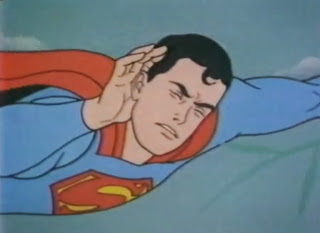
“Did your hearing get better after you lost your vision?”. I can almost guarantee that someone will ask me this question when having a conversation about my vision loss. Hey, I understand…inquiring minds want to know, and I have no problem answering this commonly asked question. I will typically explain how I focus harder on my hearing now, as well as other senses, to fill in the visual blanks with information about my surroundings. Going blind did not instantly give me any blind girl superpowers. Nope. There was no magic or lightning bolt moment. I quickly recognized the need to regroup and rewire myself to give more power (i.e. strength), to my other senses. In turn, my sense of touch, taste, smell, and hearing, are heightened by my own doing, not because I went blind.
If you want to categorize my sassy “sense of humor” and sensational “sixth sense”, (feeling the vibe of a person or situation), as superpowers… Well then, I guess I DO have those!! Okay, so where did I put my damn “Super GGB” bodysuit and mask? Someone needs to find that shit for me ASAP!
Now… to further explain the question about hearing, without getting too complicated, I found this little nugget to share with you all…
Can Blind People Hear Better Than Sighted People?
There is an often-quoted view that a blind person’s remaining four senses are heightened to compensate for their lack of vision. In popular culture, sightless superhero Daredevil makes use of his super senses to save the world, and in the film Scent of a Woman, Al Pacino’s blind character could tell one perfume from another at the drop of a hat.Many blind people feel their hearing is no better than sighted peoples – its just that they have to listen more intently to sounds around them. They gauge distance and direction of traffic by ear to avoid being hit by a car, and will tune into announcements at stations to find out which platform their train is on. Sighted people are more likely to focus on the display boards when traveling. But there is some evidence to support the heightened senses theory. Research at the University of Montreal in 2012 suggests that a blind persons brain does re-wire itself to use the visual cortex. Normally preoccupied with seeing, its hijacked to improve the processing of other information such as sound and touch.
Some blind people use reflected sound waves to build a mental picture of their surroundings (similar to bats and dolphins) in a process known as echolocation. Most use it all the time without realising, to avoid walking into things. Others claim to be able to tell an object’s distance, size, texture and density by clicking their tongue against the roof of their mouth about three times per second and are able to go hiking and cycling without a white cane or a dog.
Shared from Lesser-known things about being blind – BBC News
Blind Reflections | Alyssa Price

Seeing The Beauty of Our Family Vacation | A Blind Reflection by Alyssa Price
We went to Hawaii and I couldn’t see everything my family did. Being completely color blind (except for blue) and being visually impaired at the same time sort of ripped some of my Hawaiian experience away. But, looking back, I can see the true beauty of our family vacation.
Beauty was my brothers, dad, and I getting away and spending a week together after this horrible year.
Beauty was pouring sand that we got in Hawaii on my mom’s grave. Beauty was sitting as a family each night and day, eating dinner together and roasting each other.
Beauty was seeing my dad happier than he has been since January 1st.
Beauty was knowing my brothers had a ball swimming with dolphins.
Beauty was being with my family that I love more than anyone besides God.
Beauty wasn’t the island, because I couldn’t see much of it, but just lemme tell ya, Hawaii is the most beautiful place on the planet – all because my family was happier than we had been in a long, long time. Visually impaired people can still see beauty. Trust me, we can. ~ Alyssa’s Facebook post | 9/16/17
About Alyssa
 Alyssa is 20 years old and lives in Georgia with her dad and brothers. She started losing her vision early last year and was diagnosed with Lebers Hereditary Optic Neuropathy (LHON) In August 2016. In January 2017, while coping with the loss of her mother, she was also diagnosed with MS. Alyssa’s faith in God has kept her strong through her struggles. ♡
Embrace The Cane | By Sassy Wyatt
I first read this blog post, by Sassy Wyatt, several months ago and I absolutely loved it. It was genuine, honest, and REAL. I could relate to it in a million different ways. I recently reread it, and I still feel the same way. Love it. In the past, I have featured several brilliant blog posts, written by other bloggers, reflecting on their experiences of accepting and using the white cane. When I came across this post again, there was no doubt in my mind that I had to feature this one too!
Embrace the Cane | By Sassy Wyatt | Thinking Out Loud
I first had cane training lessons when I attended a specialised college for the blind. My sight was deteriorating, and after speaking with my Mum about it, she suggested getting in touch with the mobility department and asking for cane training encase I needed to use one in the future.
And that’s what I did.
In my free periods, I would have cane training with a mobility teacher, she was very patient with me; knowing how much I despised the thought of using a cane, I saw it as an embarrassment, and a way to draw unwanted attention to myself.
I used to cringe when having to use the cane on campus, and about in public.
The specialist college that I went to had a large number of visually impaired people who were mainstreamed in high school, and they didn’t use a cane, the majority of these people, like myself, felt confident without a cane and just saw it as a nuisance. So for the whole time of my college years myself and others who were visually impaired did not use a cane. And as horrible as it sounds, I actually believed that I would get mocked and sneered at if I were to admit I was taking these lessons.
I was in a juxtaposition with myself; I didn’t want to learn to use a cane, because that meant there was a possibility I would need to actually use it, but when I was out with my mobility teacher and it was just she and I, I felt more relaxed and wanted to conquer it. I was eager to learn and get things right, and would constantly chastise myself when my swing was out of time with my footing. (I am a left handed cane user; so as I step out with my right foot, my cane swings across my body to protect that side from being caught by an obstacle).She taught me how to swing in step, how to go up and down stairs and how to cross a road safely and properly as a cane user. By the time I left the college, I felt confident that I could actually use a cane if ever I needed to.
*********
The first time I used the cane was about a month before I lost my sight completely. Again, I admitted to my Mum how hard it was to get around, how I felt scared a lot of the time and would ask people to come with me somewhere, or guide me whenever we were together.
I would see bollards or wheelie bins at the last possible second, and on a few occasions, it was too late and I got a bruising from inanimate objects. Likewise, I would jump out of my skin and sop dead thinking there was an obstacle in my path, but there was nothing there.
I was constantly nervous leaving my home, and avoiding doing so at all costs unless I was assisted. I was losing my independence and I hated it.
I said to my Mum that when I came home for the summer, I would conquer my embarrassment of the cane and use it, because I knew it was time I used it. I was becoming a danger to myself, and potentially others.
Mum agreed.
Note to self: don’t tell Mum anything!
Mum tells the entire family i’ve decided to use my cane after all these years! “Even though she should have been using it years ago!”!
Every time I went to leave the house: “Sassy are you going to take your cane?”
*Hates self for telling Mother about the cane*
“No, I don’t need to., it’s really sunny out and I know this town like the back of my hand.”
A few days of this conversation happening…… Mother had asked me to go to the shop and get some bits, knowing I would struggle finding the items and the stress of it all I waited until my Sister got home from school and asked her to come with me.
“Yes. But only if you take your cane.”
“Francis don’t tell me what to do, i’ll use my cane when I need to!”
“Well i’m not taking you to the shops then, Sassy you said to Mum weeks ago that you know your sight is too bad to not use it, and that you know it’ll help you not only get around safely, but it will allow people to see that you can see them and not just being ignorant!”
*Fuming at my little Sister for telling me what to do, and showing sense*
“Fine! Let me go change.”
“Go change? It’s really warm outside Sassy, what are you on about?”
I’ll be back in a second!””
“Why the hell are you wearing a hoody?”
“So I can wear my hood up.”
“What? Why?”
“So people can’t see me.”
“Sassy you’re wearing a bright pink jumper with your hood up in summer, people are going to notice you, regardless of the cane!”
“Just shut up and let me do what I want!”
*All the way down to the shops*
*Oh god this is so embarrassing, see I knew people would be staring. I hate this so much*
“Sassy you look so stupid. Put your hood down.”
“No!”
“Put your hood down and your head up, everyone knows you’re blind anyway. It’s pretty obvious who you are !”
By the time we got home Mother was already back.
“Why are you wearing a jumper, and with the hood up?”
“So I can hide.”
*Mother just laughs and listens to Francis retail the scenario. While I stalk off*
From then it became a bit more of a frequent occurrence, if I left the house I would take it. Still under duress I will say! But I used it more often, still deliberately leaving it behind if I could get away with it!
********
The day I lost my sight, and actually realised I couldn’t see I kept thinking thank god I brought the cane!
I left the hospital with my Parents and embraced this ugly duckling, that had transformed into the beautiful white Swan before my eyes. Figuratively speaking of course! 😉
In the strangest of ways losing my sight, opened my eyes to the independence I could now have with this ugly white metal object.
Because I couldn’t see people watching me, or staring, they didn’t exist.
The cane became MY cane: my aid, my ally and an extension of me.
And from then, on I’ve never looked back! 🙂
I hope you liked my story 🙂
This blog was originally published on Thinking Out Loud – April 10, 2016
 About the author
Sassy Wyatt is 26 years old, and lost her sight a little over 3 years ago. She lives near London with her Handsome and hilarious fiancé Gary, and her gorgeous Guide Dog Ida! 🐾 Sassy started writing her blog Thinking Out Loud in October 2015, and it is where she shares her ramblings and anecdotes of a girl with a disability. Be sure to check out her entire collection of blogs!!
Is "Blind" A Bad Word?

I recently had one of those random encounters with a stranger that got me thinking. Thinking about the comfort – actually, the discomfort, that some people have when it comes to saying the word “blind”. Is “blind” a bad word?
Based on my past, and most recent experience, there is clearly a hesitation when it comes to saying the word “blind” to describe someone who is…well, blind.
My recent thought-provoking encounter happened a few weeks ago. I’ll try to keep the story short. Ha ha ha! Anyway…. We bought some new patio furniture, and a couple of the store employees were kind enough to help us carry the furniture out to our car. I stayed back in the store, with my white cane in hand. I figured I would wait until all but one chair needed to be taken out. I asked the gentleman taking that last chair, if I could walk out with him. He was ok with it, so that’s what I did.
As we were walking, he said, “So, I used to know a girl like you.”, (awkward pause), “She was, you know, Uhh…”, (more awkwardness). I knew what he was trying to say. The poor guy was obviously flustered. I thought I could say a few things to keep the conversation going. I could say, “She was sexy?”, or “She was blind?”, or “She was the sexiest blind girl you’d ever seen, until you saw me?”. Well, I chose to behave myself and went with, “She was blind?”.
With a sense of relief in his voice, he said, ”Yeah. Yeah, she was blind.”. At the car, I thanked him for his assistance, but, I was left wondering why he was so flustered over what word to use.
It took me a while to add the word “blind” into my vocabulary. And over the last 4 years, I have gotten comfortable using and hearing the word. Accepting the word “blind” into your life happens differently for everyone. It’s especially hard when you lose your vision suddenly and unexpectedly with no chance to prepare yourself. This I know. It’s a process, like every other adjustment we have to make.
I suspect many people in the blind community are quite used to hearing the word “blind”. I also suspect that many sighted people are not used to having a conversation with a blind person. In turn, the word “blind” is unfamiliar to them. It may provoke the unthinkable thought of going blind. Perhaps they don’t know if it’s appropriate or PC to use these days. The unfamiliar, unthinkable, and unknown can take anyone down the path of feeling uncomfortable. Could these be reasons why people hesitate to say this word to those who are blind? Does this uncomfortable feeling hold people back from having conversations with the blind? I’m going with, probably. I wish it wasn’t that way. –”Blind” is not a bad word.
The word “blind” is used in my life on the daily. I expect it to be used in a way that is appropriate, courteous, and respectful. I know that won’t always happen. Rude people and ignorance does exist.
I imagine there are lots of people in this world who don’t know what to say to blind people. Take the awkward encounters as a chance to educate. Offer up your preferred “description” and create a more comfortable conversation. As for me, I think I’ve made it pretty clear that I’m totally fine being described as “blind”, or better yet, “blind and sexy”! xx
The Beauty Of Resiliency In A Life After Sight Loss
Few things have such a huge impact on happiness and the enjoyment, depth, and fun of life as the friendships we have.
It could be the friendships with people in our community, workplace, gym, or school. Close friendships can evolve with the people we’ve known for a few months, years, or since we were kids. Personally, I spend a lot of time cultivating and nurturing an array of friendships, while also striving to be a good friend.
 Sometimes. If we’re fortunate enough. The most priceless bonds can form with people we have never met in person. Perhaps they live in another city or state, or halfway across the world. I have a friend who lives in a land far, far away. Her name is Jill Barkley, and I’ve never met her In person. Well, let me tell you, that little detail hasn’t stopped us from becoming best friends. I can’t wait for the day when we meet and talk about our friendship, so treasured and deep – not on FaceTime, but face to face!!!
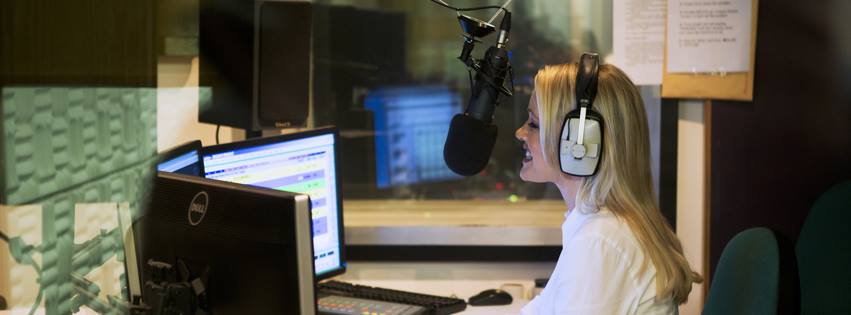
I was introduced to Jill In early 2016 and started doing a weekly segment together on her RNIB Connect Radio “Morning Mix” show. It’s definitely one of the highlights of my week! I came across a featured story on MakeHer Movement, that will tell you about this gorgeous girl who lost her sight, but not her fight. Her resiliency is nothing short of true beauty.
Here is Jill’s story
Imagine MANY stunning, sensational, beautiful colours unfolding before you… the only way to make you experience the exquisite beauty of these colours is to tell you Jill’s story.
Once upon a time there lived a fragile teenager named Jill who was watching the most beautiful New Year’s Eve fireworks in Switzerland. Six months later Jill aged 19 was completely blind.
Due to a condition called Diabetic Retinopathy, which was a result of Type 1 Diabetes, Jill’s sudden sight loss was a situation she had to learn to accept very quickly. The visits to the best doctors and the best treatments only brought Jill to her knees crying helplessly – till one day she stood up, wiped her tears and accepted the colour black.
Now that’s also about the time her colour black started turning colourful.
Before getting to the core of the story – here are some notes from the diary of a teenager who turned blind literally overnight!
· Me or my family didn’t know anybody who was blind – NOBODY. So how does one make blindness a way of life? No “How to” book available.
· Nothing changes for you when you turn blind overnight – you love people just the same. Family, friends, neighbours etc. But does everyone love you the same? See you the same? Or do they view you as an exhibit?
· When your little brother’s heart is broken because you will never be able to see him again, that’s when you turn your life around for him. You decide that no matter what, you will never give up – you will not end up just weaving baskets and answering calls.
· Have as much fun as possible Jill
Back to Jill’s story….
After a short stint at Hospital Radio in Ireland which she loved, Jill travelled to Scotland to study sound engineering – she was the topper in her class of 80 boys. She later enrolled for a media degree, after which she worked as a journalist and absolutely loved it. Moving forward, Jill joined RNIB Connect Radio in Scotland and became a radio presenter. Over a long heartfelt call, Jill was INSPIRING MakeHer Movement with her story.
We figured out one thing – it’s wasn’t about how much fight there was in Jill – it was about, how much ‘JILL’ there was in the fight!
Which translated to – Never, Never, NEVER, Ever Give Up!
The colours were sometimes bleak – She was deceived by her boyfriend after she became blind who stole all her money, severely attacked by two men when she was walking with her guide dog, hospitalised for two weeks after being attacked, rejected many times when she went for job interviews, the death of her mother, violent relationships in her life… and every month this year something set her back. A heart condition, extreme eye pain, badly bullied by a trusted person, tripped and fell and then her house flooded!
Isn’t that enough to cave you in or do you tell yourself like Jill always tells herself – ‘When you hit rock bottom there is only one way to go – UP!’
 This story is incomplete if it didn’t mention this – Jill would go through this all over again just to have met the love of her life – her husband, Ian.
And hence – The beauty of being blind is the story of Jill Barkley. While she is blind for life – the colours are different and exquisite everyday. ~ Posted on MakeHer Movement |July 2016
 Nowadays, Jill lives in Glasgow Scotland, with her husband, Ian, and her precious puppy, Paddy. She is still currently the radio presenter of the daily “Morning Mix Show” at RNIB Connect Radio – The UK’s first radio station for blind and partially sighted people. She is also a presenter at BBC Radio Scotland with”The Jill Barkley Show”. Lastly, she is my UK BFF and I love her to bits! ♥️ ♥️
The Girl Gone Blind Podcast Collection
A podcast collection? Yes, I just put it together! This collection contains interesting, insightful, and incredible conversations I’ve had with some fantastic people from many parts of the world.
Although you can find links to a plethora of podcasts, and other good stuff, under the “Podcast” tab… I often get asked to provide links to specific podcasts OR podcast episodes where I am a host or a guest. Some of these episodes are easy to locate, while others are often buried down in the archives of a website. So, to make life easier for me, and you, and anyone living as far as Timbuktu… I decided to put these specific links all in one place. A collection if you will! Brilliant, right?! I know, I know. Sometimes I even amaze myself! Now, without further ado, here is the collection! ENJOY!
Podcasts | with GGB – Maria Johnson as contributor or Co-Host
RNIB Connect Radio | Weekly Contributor
LHONReport Podcast | Co-host
Podcasts | Various Episodes | with GGB -Maria Johnson as featured guest
Reid My Mind Radio | January 2017
Ability Stories-Part 1 | April 2017
Ability Stories-Part 2 | April 2017
Life After Sight Loss | June 2017
Blind Abilities | June 2017
AT Banter | July 2017
The Blind Hour Podcast | August 2017
Life After Blindness | September 2017
Life After Blindness | January 2018
Blind Alive – Eyes- Free Fitness | February 2018
Blind Alive – Eyes-Free Fitness | March 2018
A BIG thank you to all of the above podcasters, presenters, and producers for having me as a guest on their shows! I thoroughly enjoyed my time on each and every one of them! ♥️ As new podcast episodes are recorded and released… I will add them to the collection! xx
 Feel free to contact me about any podcast guest opportunities OR filling in as a Co-host!
You can email me at: wowmariajohnson@gmail.com.
Blind Reflections | Steven Reed

Reflecting on one of the best years of my life | A Blind Reflection by Steven Reed
Today is my parents 46th wedding anniversary.
It also happens to be the 3rd anniversary of the diagnosis of my sight loss condition, LHON, so it’s a good time for a reflection, I feel.
This last year has been amazing. I’d go as far as to say, it’s been one of the best of my 44 years.
As an actor, I appeared in 2 TV series, Chewing Gum & Eastenders, as well as filming a small role in a feature film, with Will Ferrell, Ralph Fiennes and Rob Brydon. I also appeared on stage with Extant, the country’s leading VI theatre company and will be taking the same play to 2 more festivals later this year. A busy year then, which also included a short film with an interesting concept. I can’t wait to see how it turns out.
I continued to volunteer at the RNIB, which is very fulfilling and rewarding. I’m giving back to those on the course that I got so much from. I even stood in and facilitated the course while the boss was off long term sick.
I’ve got myself a girlfriend!! We’ve known each other over 2 years, but got together in March. She is a beautiful, wonderful woman and we are so happy together. We also both have the same rare condition. Apparently there are only 35000 people in the world with our condition… what are the chances of that?!!
Recently, I got behind the wheel of a car again, after 3 years of not driving. It was with a company called Speed of Sight, who specialise in driving experiences for the disabled and the guy that set it up is VI. It was amazing and exhilarating and I would recommend it to anyone. (See video below)
Inspired by my cousin, I’ve had a go at some VI sports, attended dance classes run by Illuminate Freedom and helped out on the Equity Deaf & Disabled Committee.
So I’m sure you can see why I’ve had an amazing year!! That’s due to continue as I’m off to Orlando in a couple of days, with my family and will be going to Croatia with a play in October.
This blind man is already looking forward to next year’s look back!! ~ Steven’s Facebook post | 7/31/2017
About Steven
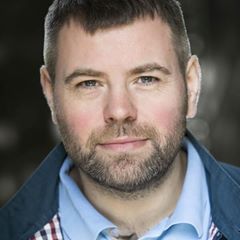 Steven is 44 years old and lives in the UK. Three years ago, he was diagnosed with Lebers Hereditary Optic Neuropathy (LHON), and is now legally blind. It’s pretty obvious that his sight loss has not held him back!
Pride and the Fear of Prejudice: Reflections on Picking Up a White Cane | Eric J. Harvey

I am totally intrigued by the thoughts, feelings, and experiences of other blind people when they reflect on their acceptance and use of a white cane. I suppose it’s because I can relate to 99% of what they have to say. I came across this blog post, by Eric Harvey, and knew I had to feature it. Some of you may not relate to his perspective, but I suspect many of you will!
Pride and the Fear of Prejudice: Reflections on Picking Up a White Cane | By Eric J. Harvey | Blind Scholar
I need to get used to people staring,” said my wife, Kristin, as we walked up a busy sidewalk one evening, passing small clusters of shoppers and bar-hoppers.
“Oh, are they staring?” On some level, I know people do—I’ve thought about it a lot, in fact—but I don’t usually notice when it’s happening.
We walked on for a moment, passing a few more chattering groups. “It’s pretty rude, actually.” A little more edge in her voice this time—a hint of anger and offense on my behalf.
It wasn’t the first time I’d had my white cane out while we were walking together, but it hadn’t yet become normal and run-of-the-mill. It still hasn’t, really. I don’t need the cane in my own house, or my own neighborhood where I’m comfortable, but in unfamiliar surroundings, or at night, or in crowds, I can no longer get along without it.
So I have started using the cane. I resisted it for a long time—I carried it with me for a year before I took it out in public. When I use it, the benefits are real. I am calmer. I don’t feel the constant fear that I might trip over a curb or run into a bench or a sign or an unsuspecting pedestrian. I hadn’t realized how tense I could get walking until my cane let me relax.
Why did I resist for so long? It wasn’t the stares, per se, because I don’t notice the stares. I do notice other things. I notice people get out of my way. I hear children comment, or maybe just their parent saying “because he can’t see, honey—keep walking,” in a loud, embarrassed whisper. Sometimes, people are nicer to me. When I run into people, they apologize to me. People offer directions and guidance when I’m walking. Panhandlers don’t see me as a mark, so they say hello and have a nice day and we each go on our way.
These are minor things, perhaps. On their own they would be annoying, tiresome, occasionally disheartening, but they are not on their own. They are just a few symptoms of a deeper and harder truth. When I carry my white cane, people see me differently. That thin metal stick blocks everything else from view and becomes the controlling factor in my first impression.
Suddenly, I am not just a man.
I am a blind man.
And that, my friends, is a hard move to make. I spent most of my life actively trying to avoid being labeled for my vision, and for the most part I succeeded. My eyesight has always been poor, but it hasn’t defined me. People have gotten to know me first, and my visual impairment after. In a few cases, I knew someone for years before they learned I had low vision. It’s not that I tried to protect the secret that fiercely. I never outright denied it, but if a situation never arose where I had to admit it, I didn’t feel obliged to. It cannot be hard to imagine why I would rankle at the thought that my visual impairment, that thing I had sought to hide for so many years, would now become the first thing any new acquaintance would learn about me.
 Looking back, it’s easy to interpret my reticence as vanity and empty pride. It’s easy to say I was foolish to avoid a useful and necessary tool just to maintain appearances.
But I’m not alone. Many people with progressive vision loss wait way too long to start using their canes. My first Braille teacher would lament the stubbornness of her students at length: they wait too long to give up driving, they wait too long to learn Braille, they wait too long to start using their canes.
She once told me of a man who insisted he did not need a cane full-time. He was perfectly safe walking without it. After all, he had only been hit by two cars.
So before you chalk my resistance to the cane up to ego or foolish pride, consider how many others also resist. Consider how strongly they resist. And consider the factors that lead them to resist. They are not illegitimate.
***
Seventy percent of blind people are unemployed. The reasons for this—the historical degradation of the blind, the problems of education and accessibility, and so on—could fill volumes, but none of them is absolute. None is immutable. With some adaptation and accommodation, most blind people are fully capable of earning their pay the same way any other person does.
This unemployment rate is not the necessary result of blindness; it is driven in large part by social perception of the blind. A recent study from Johns Hopkins University showed that Americans fear blindness more than any other malady: more than losing their other senses, their limbs, even their memories and their minds. Sighted people fear blindness, and they project that fear onto the blind. The victims of their greatest fear become the objects of their greatest pity.
And pity is not an emotion that expects great things. Pity patronizes. Pity belittles. Pity excuses. It does not inspire faith, or trust, or get you a job.
***
Dr. Sheri Wells-Jensen, a professor at Bowling Green State University who is blind, created a short video illustrating the difficulties that blind people have in job interviews. The interviewers are not antagonistic, but their view of blindness has been conditioned by naive assumptions about the difficulty of being blind and their participation in a blindfolded simulation. Throughout the interview, they ask the blind interviewee simplistic and demeaning questions that betray their rock-bottom expectations for her performance.
“Did you type this? Oh my gosh, how? I don’t see a single typo or anything!!”
“When you teach, how do you know where the students are?”
“I’m happy to walk you to your car. Do you need help getting down the stairs?”
They dismiss her legitimate achievements—an earned Ph.D., independent research, and ten years of teaching experience—and focus instead on her “impressive” ability to perform the simplest tasks. By the end, it is clear she was not interviewed as a candidate, but as a novelty.
In an online discussion of the video, a blind graduate student asked if this was really the experience she could look forward to when she entered the job market. Dr. Wells-Jensen replied that interviewing wasn’t quite this bad—she had heard all of these things in one interview or another, but she had never heard them all in the same interview. Small consolation, for those of us with our careers ahead, but it is the reality we must face.
***
Jobs and opportunities are not earned. They are not simply conferred based on met requirements of ability and achievement. Jobs are given. They are given by people, based on those people’s perceptions of the candidates.
Like it or not, the perceptions of others have a profound impact on our lives, and all of us—whether we acknowledge it or not—go to great lengths to manage and influence those perceptions.
I lived the first thirty-four years of my life with the ability to control how others perceived me. There was no part of my appearance or manner that instantly and inevitably lowered my estimation in the eyes of those I met. When I picked up the white cane, I took up the mantle of blindness, and the prejudice that comes with it. I could put that mantle down again, just by putting away the white cane. It was a symbol, the sign of my blindness, and while I could hide it, I did.
Increasingly, signs of blindness are always with me, in my body and my behavior. I’ve failed to recognize too many faces, missed too many offered handshakes, run into too many obstacles to think I can hide it now. The social benefits of keeping my cane zipped up in my bag have faded as the practical benefits of using it have grown. I am blind whether I carry it or not, and now I am seen as blind.
***
The main lesson here is not about white canes. I’m not just telling people to stop worrying and learn to love the cane. Everyone who loses their sight has to weigh the benefits of the cane against its costs, and decide for themselves when to use it (or when to get a guide dog!).
No, the lesson I’ve learned is about my fear. It was not baseless, and the thing I was afraid of is real, even if I couldn’t articulate it in the beginning. Social perception has deep and long-lasting repercussions in the real lives of blind people and it drives many of us who are going blind to resist tools that could help us in practical ways. Being hit by a car is a problem; so is unemployment.
But this is hard to see from the outside, and harder to truly appreciate. Even my Braille teacher, who worked closely with the blind and the going-blind, could not see the reasons why her students didn’t use their canes as early as they should have.
In this way, it is also a reminder to trust stories of prejudice and discrimination from others. My own white cane is an object I can pick up and put down, but many people are born with “white canes” in their bodies, characteristics they cannot hide that set them apart and mark them out from the rest of the population: sex, skin color, disability, and deformity. Others have “white canes” like sexuality or religion, things they could hide with effort, but at a deep cost to their identity or well-being. All of these create barriers based on social perceptions, not any real deficit.
***
The problem of prejudice can be attacked from two directions. The one I tried for most of my life focused on me—managing my appearance to avoid showing any disability or defect. That way is now closed to me, as it is and has always been closed to so many others who face prejudice and discrimination every day of their lives.
The other approach is to change the perceptions themselves, to move past the fear of being labeled and judged, and do what small part I can to show the world that naive, patronizing condescension of blind people is unwarranted and wrong. I still have to focus on myself, to develop my skills and abilities, but I must also engage actively with those who rarely come into contact with the world of the blind, to demonstrate what blind people can do, what they have already done, and to urge them to trust in the abilities of the blind.
This, I believe, is the better path, and it always has been. By working as a blind person to improve the lot of blind people, I serve not only myself, but the wellbeing of other blind people and of society at large. As you can see, however, I was not drawn to it by any special virtue of my own. It became my only option when the path of self-presentation closed. I was driven to advocacy by self-interest, but the process has taught me that it is always better and always necessary to advocate for the equal treatment and welfare of others, whether or not their trouble is also mine.
***
Luckily, advocacy for the blind has come a long way, in the hands of better and more qualified people than myself. Many pioneers have come before or are working now to improve the circumstances of the blind. Blind people want to support themselves, and to contribute to their families, their communities, and their society. They are advocating for themselves to be given that opportunity, and developing the tools they need to capitalize on it.
Since I have gone blind, I have met a host of bright and capable blind people working in almost every field: academics, scientists, engineers, coders, designers, filmmakers, woodworkers, tinkerers, lawyers, politicians, public servants.
More than ever before, blind professionals have set precedents that blind children and newly-blind adults can follow into almost any career or vocation. If blind people continue to receive educational and professional resources, we will grow our numbers in every sector of work and life. Blind people in the workplace will become less of a rarity. Someday, the intelligence and competence of the blind will be seen everywhere.
And when something is seen everywhere, there is no more reason to stare.
 Originally published July 11, 2017 on Blind Scholar. For more insightful blogs by Eric, be sure to visit Blind Scholar | The personal blog of Eric J Harvey
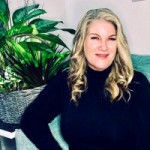 Hello! Here is a little about me. I am a mom of two fantastic kids, group fitness instructor, transformational speaker, blogger, podcaster, and advocate in beautiful San Diego, CA. Oh, and as my website name would suggest, I am also legally blind. Yes, I’m a Girl Gone Blind — and I’m here to tell you all about it!
 Girl Gone Blind